


VoIP - Voice over IP - Low Costs
Communication Solutions
|
 |
|
Description of Voice over IP
system- IP telephony: |
|
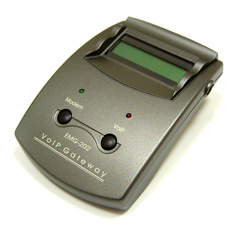
The Analog Telephone Adapter (ATA) The Analogue Telephone Adapter is a phone-to-Ethernet adapter which allows ordinary (analog) telephone devices to be used via Voice Over IP (VoIP) services and equipment. The adapter is almost the same size as a home Internet router and contains more traditional RJ-11 phone jack ports, one or two for the telephones and another one for the normal PSTN line. The analog phone plugs into the adapter, which then communicates with an Internet VoIP Server via an Ethernet connection (RJ-45 ethernet port connected to a network switch/server/router) using the Session Initiation Protocol (SIP - an Internet Engineering Task Force - IETF - standard protocol for initiating an interactive user session that involves multimedia elements such as video, voice, chat, gaming, and virtual reality). The Analogue Telephone Adapters (ATA), are the perfect alternative to an expensive IP phone. How does it work? You plug your wired or cordless phone (or even a fax machine) into one of the ATA`s RJ-11 jacks using ordinary phone wire. A UTP Cat 5e cable connects the ATA to the LAN or directly to the Internet (via Ethernet RJ-45 port), make sure you have a DHCP enabled server in your network (if that is not possible, just manually set the ATA`s IP address and Subnet Mask from the voice console or connecting it to a computer). You can either choose from the two Voice over IP phone lines and one PSTN line adapter (3x RJ-11 jack ports and 1x RJ-45 port) or for the one Voice over IP phone line and one standard PSTN line with a network router incorporated adapter (2x RJ-11 jack ports and 2x RJ-45 ports). Advantages: |
| For
any other informations or questions regarding UDcast - Lamit Company IP
& VPN acceleration solutions , please fill out the online Order Form request or Contact us directly. For Partnership / Distribution / Reseller / VAP Contracts, please fill out this Partnership Form, and we will contact you as soon as possible. |
Lamit Company -
Two
way Satellite Internet
© Copyright 2004-2010. All rights Reserved
© Copyright 2004-2010. All rights Reserved